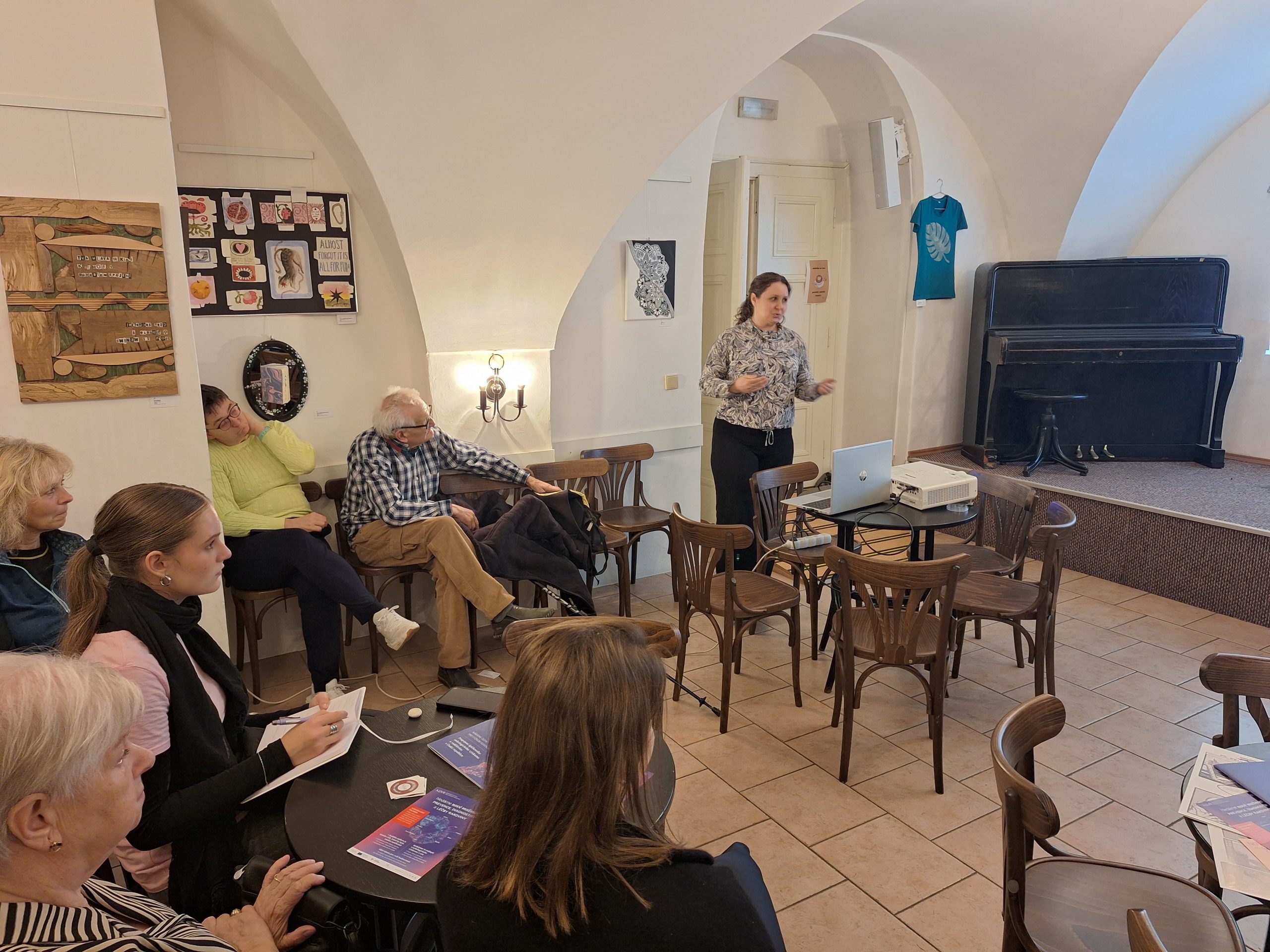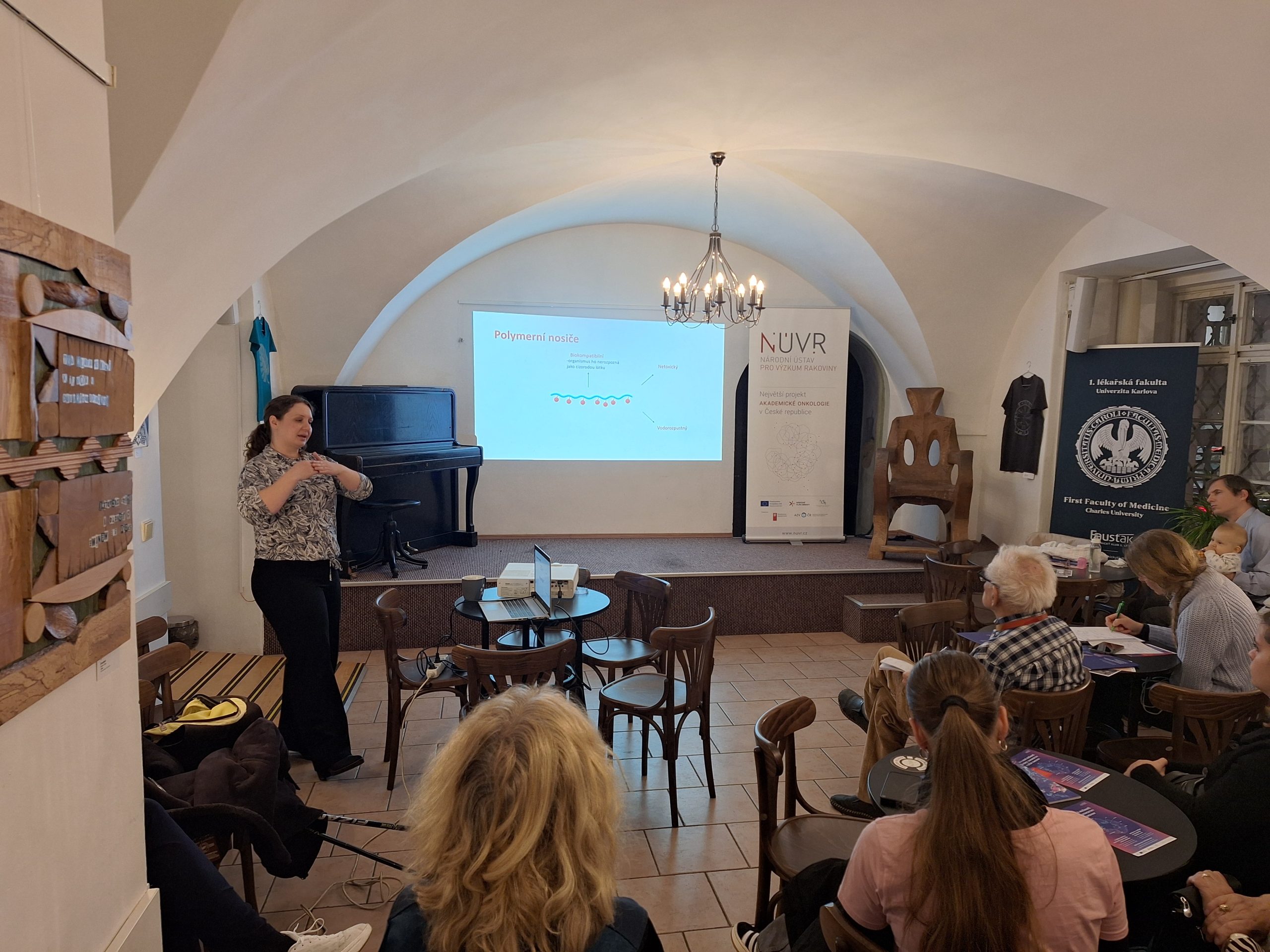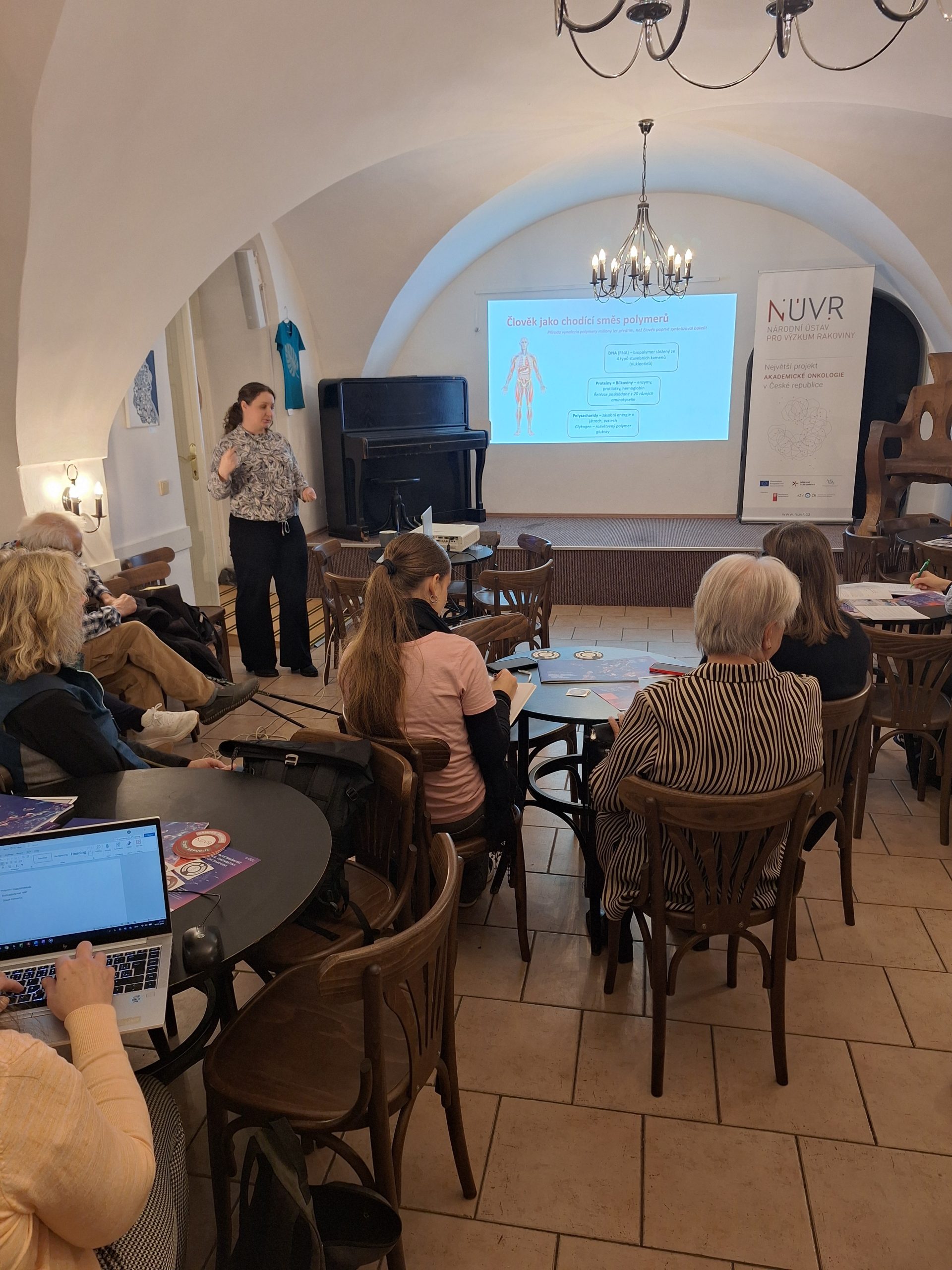



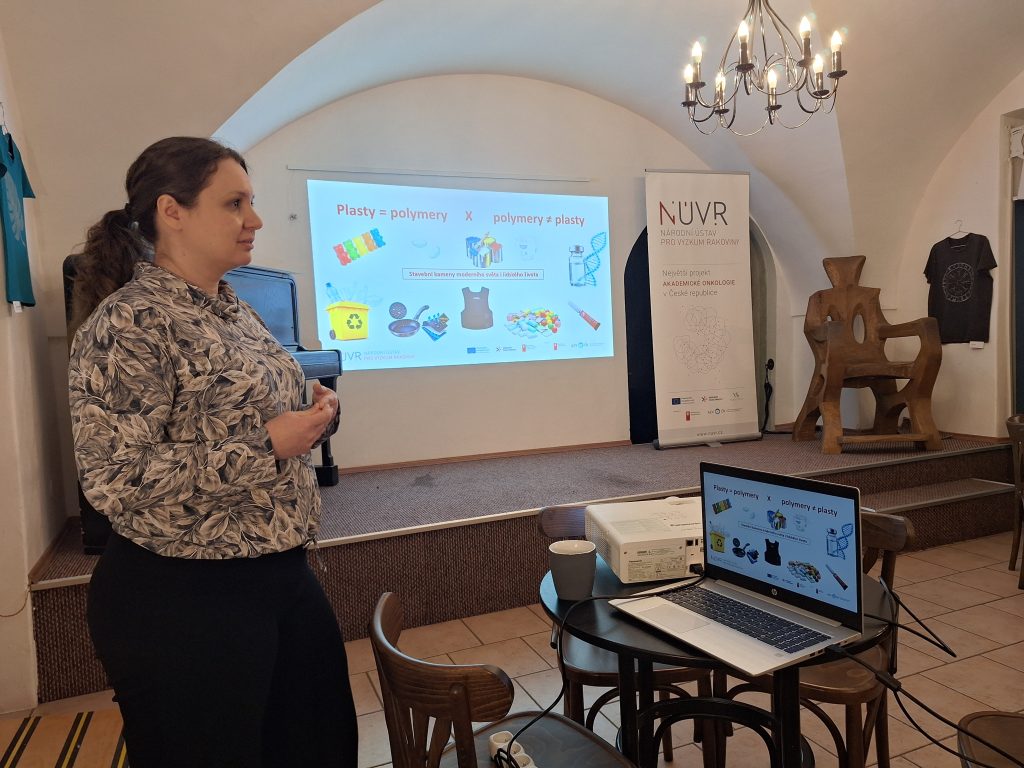
What do human DNA, joint replacements and modern cancer treatments have in common? This question was explored in a lecture entitled More Than Just Plastics: How Polymers Help in Medicine, organised by NICR on 6 November as part of the Week of the Czech Academy of Sciences.
Most of us associate polymers primarily with plastics. In fact, however, they are also fundamental building blocks of living organisms – including DNA, proteins and polysaccharides. They are also playing an increasingly important role in medicine. Their diverse properties and potential applications were the focus of a lecture by Lenka Kotrchová from the Department of Biomedical Polymers at the Institute of Macromolecular Chemistry of the Czech Academy of Sciences, which is part of NICR.
Lenka Kotrchová began by explaining where polymers can be found in everyday life before introducing their applications in healthcare. These range from disposable medical supplies to joint and vascular replacements, absorbable surgical sutures and excipients commonly used in pharmaceutical formulations.
Particular attention was paid to polymer carriers, an important area of research at the Institute of Macromolecular Chemistry. These materials can be used to attach therapeutic substances and deliver them to specific sites in the body. They also have applications in the development of new diagnostic methods and image-guided surgery, where they can help visualise tumour tissue during operations. The lecture thus demonstrated how advances in chemistry and materials research can contribute to the development of modern cancer care.
The lecture attracted a large audience to the Academic Club of the First Faculty of Medicine, Charles University, at the Faust House in Prague, demonstrating that even seemingly complex topics in contemporary biomedical research can capture the interest of the wider public.