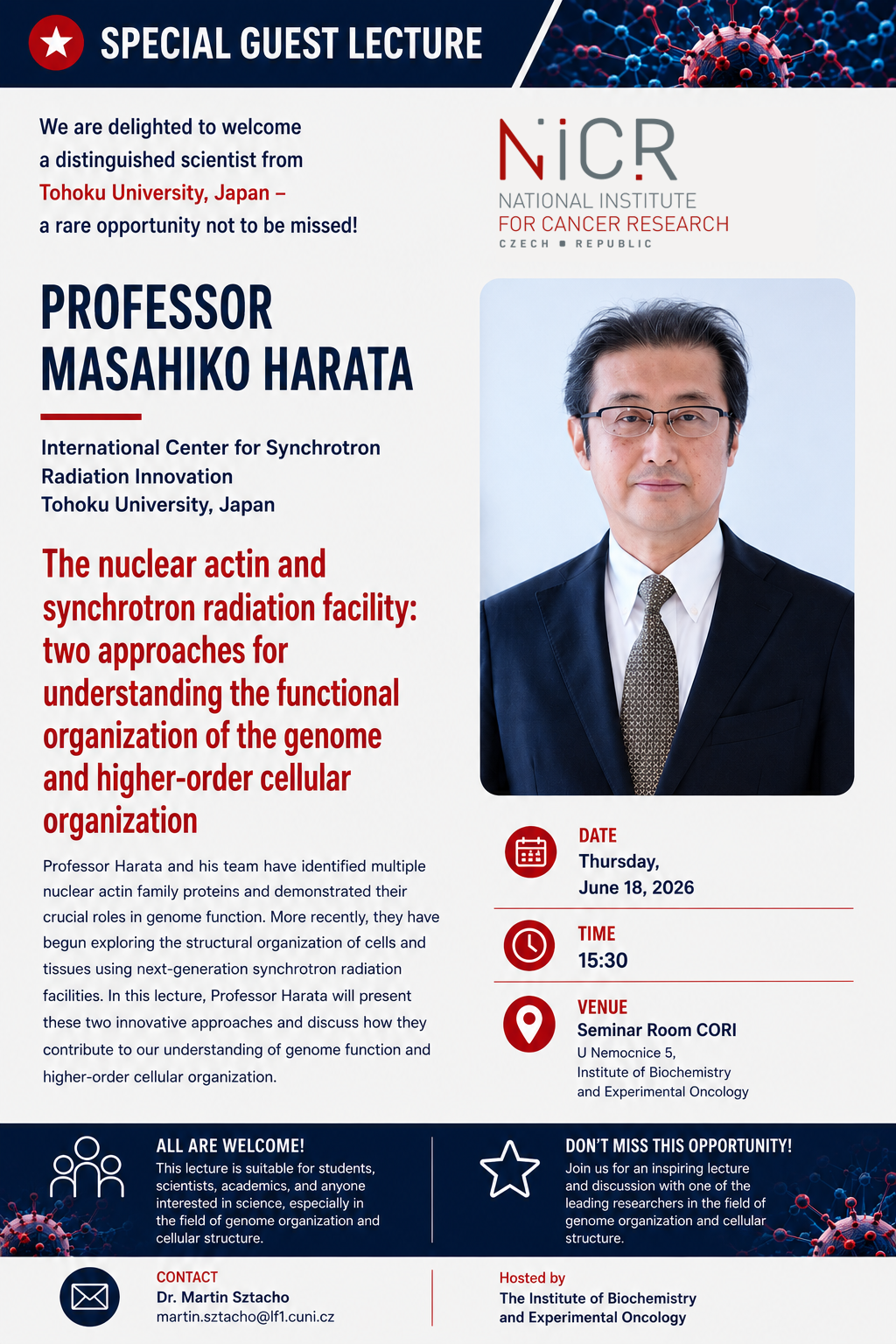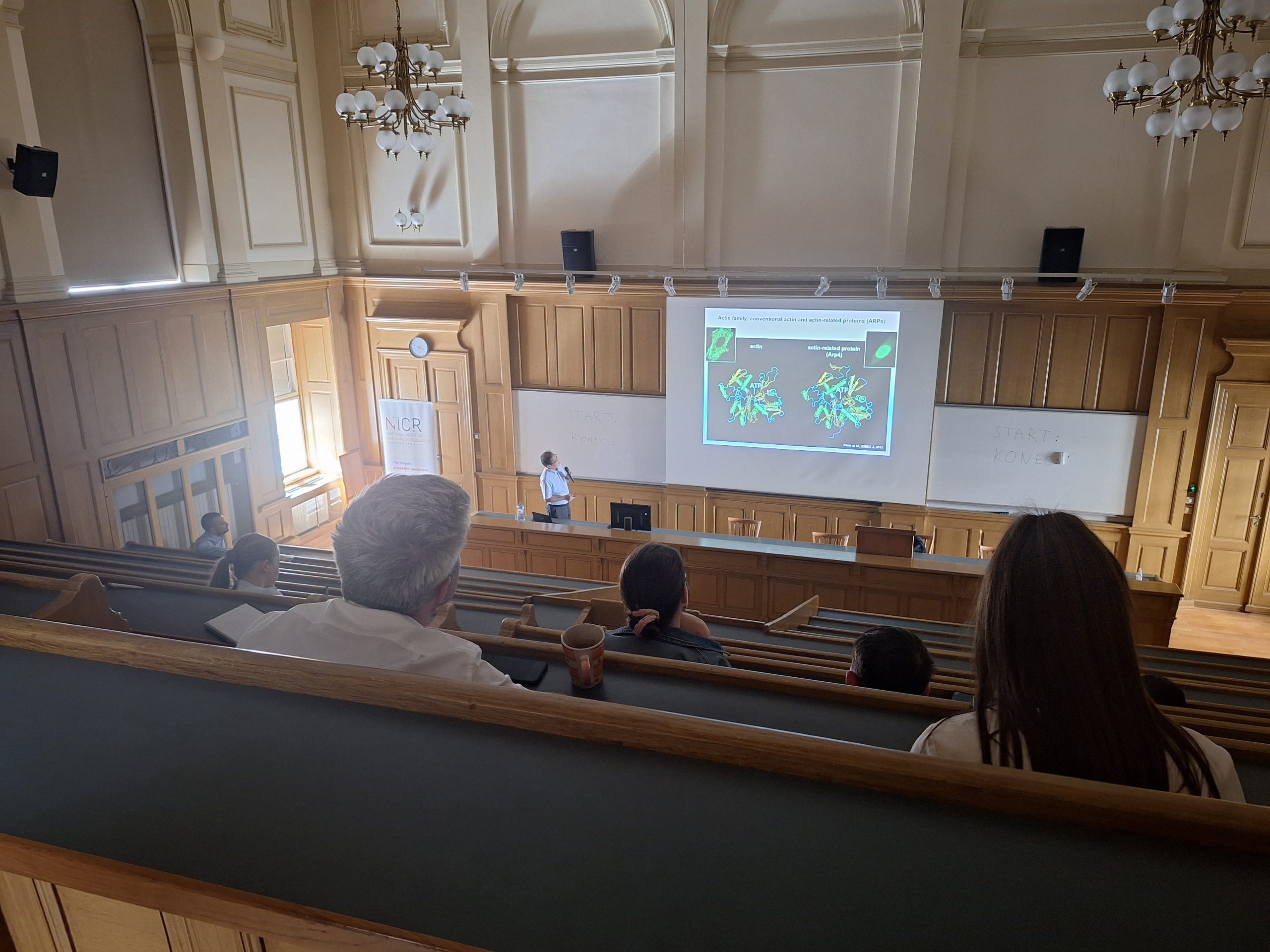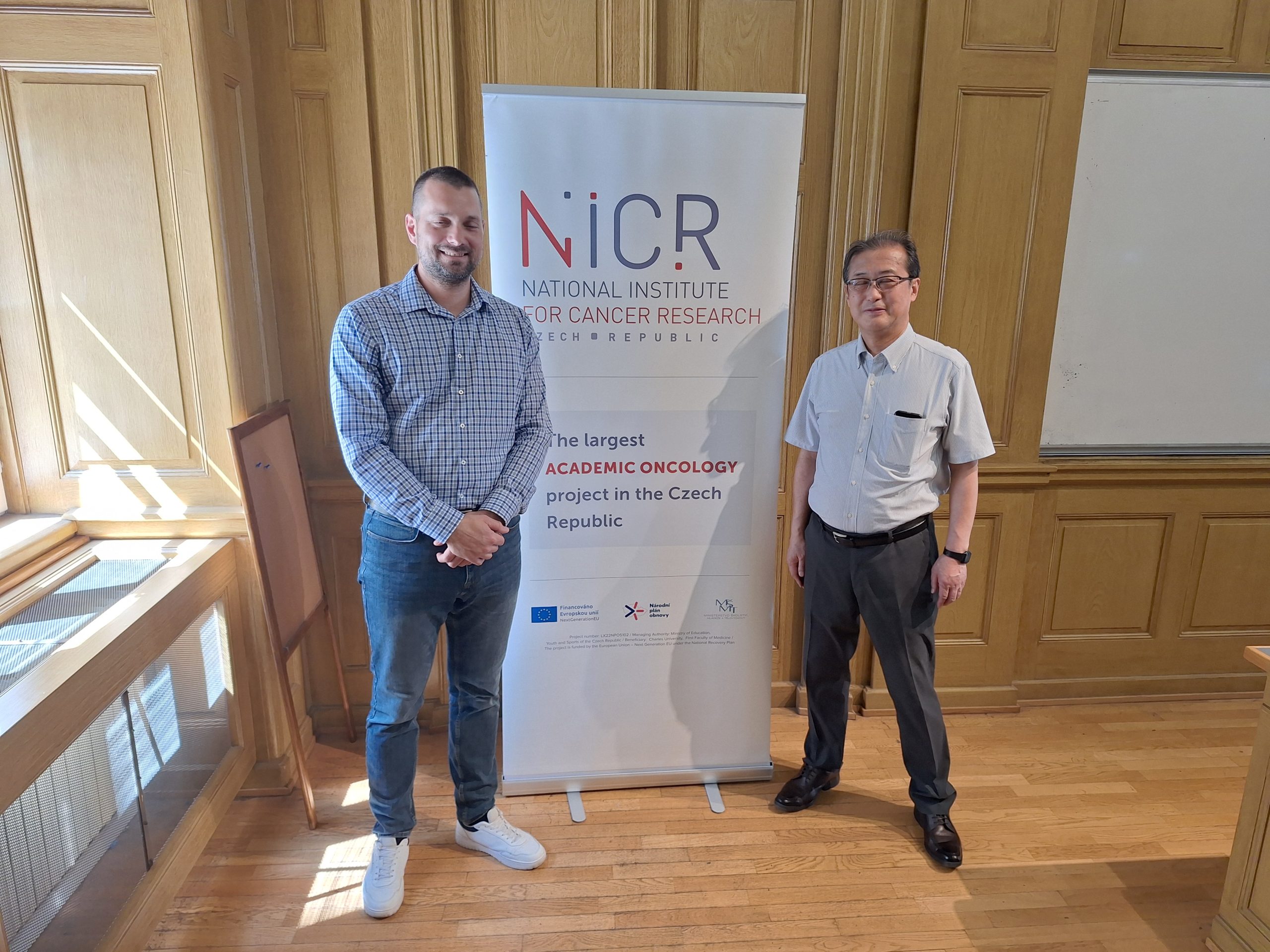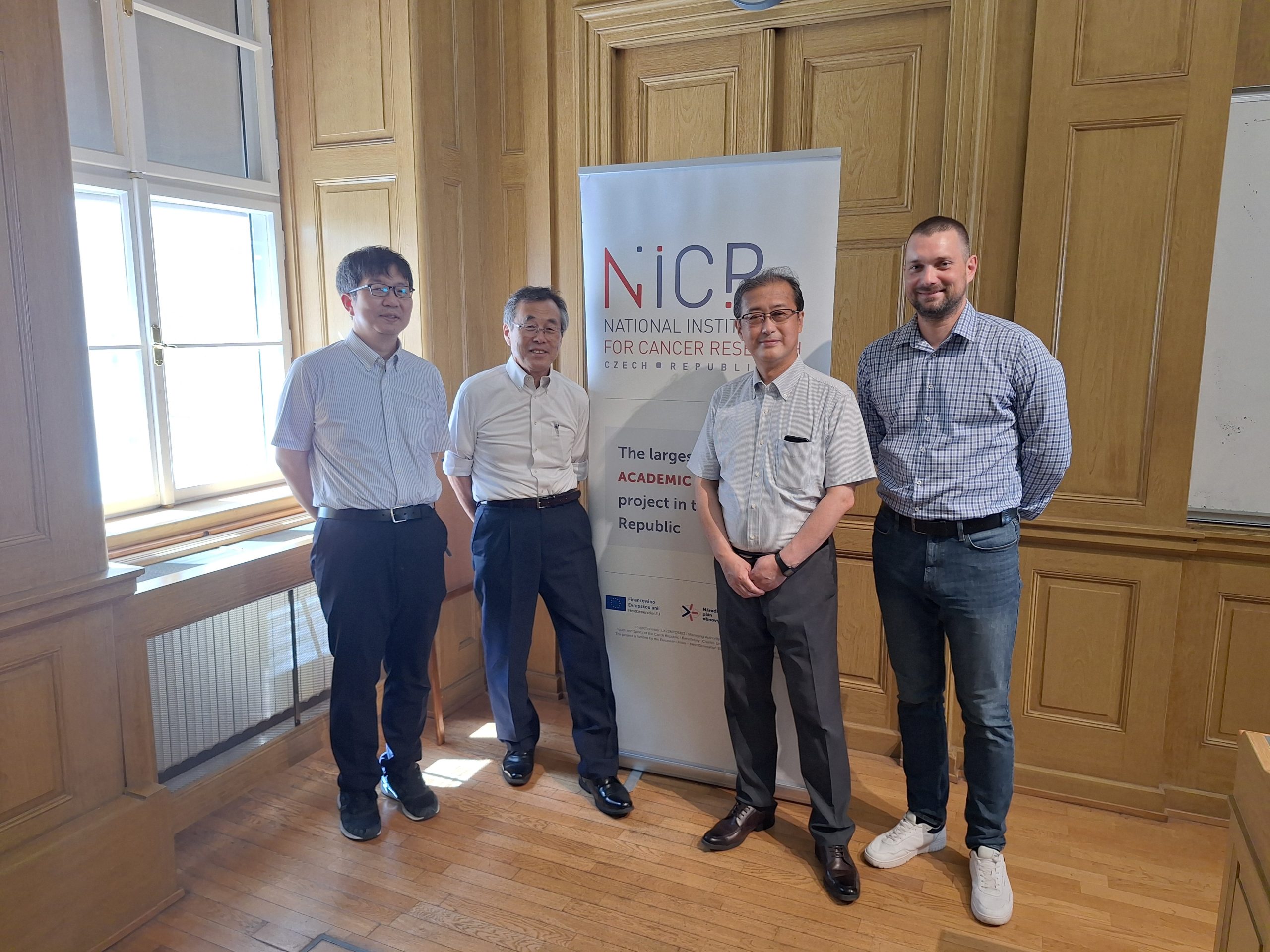



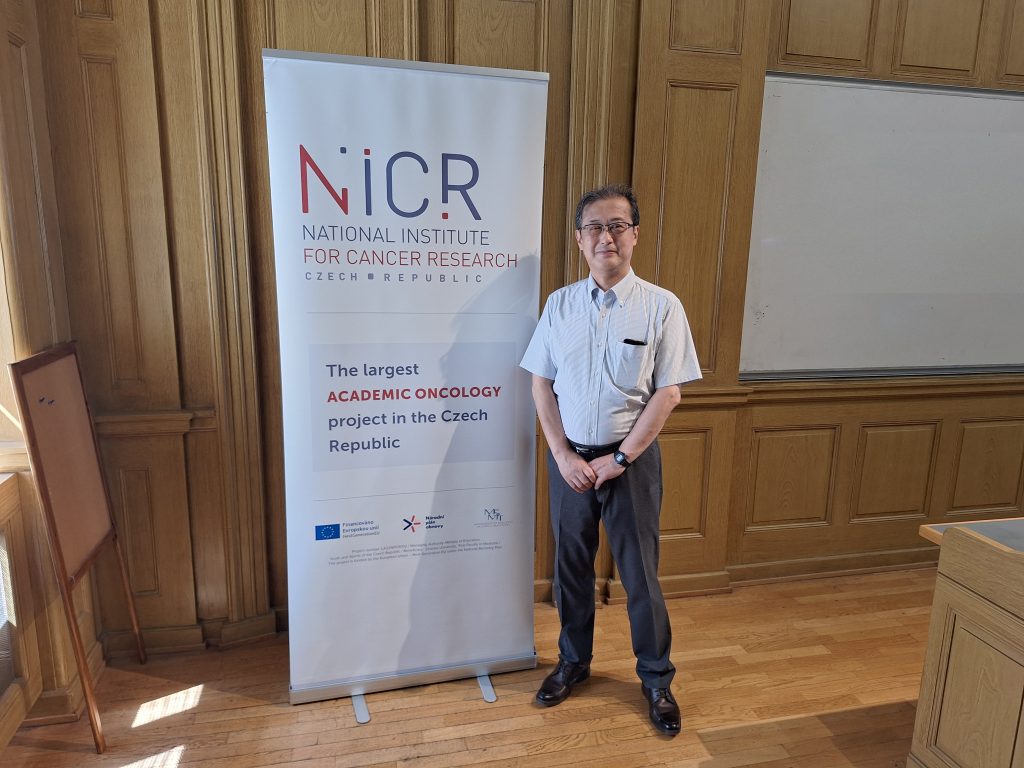
The Institute of Biochemistry and Experimental Oncology, under the auspices of the National Institute for Cancer Research (NICR), hosted Professor Masahiko Harata from Tohoku University, Japan, Director of the International Center for Synchrotron Radiation Innovation, on June 18, 2026.
In his lecture, “The Nuclear Actin and Synchrotron Radiation Facility: Two Approaches for Understanding the Functional Organization of the Genome and Higher-Order Cellular Organization,” Professor Harata presented pioneering research on nuclear actin and actin-related proteins, which has significantly advanced our understanding of chromatin organization and gene regulation. He also introduced Japan’s next-generation synchrotron radiation facility, a unique research infrastructure that enables unprecedented visualization of biological structures.
The visit built upon a long-standing collaboration between Professor Harata and Dr. Martin Sztacho, which has already resulted in several highly cited publications, particularly in the fields of nuclear actin regulation and biomolecular condensates. The collaboration has also included researcher exchanges, most notably the six-month internship of Tohoku University doctoral student Kurumi Nishimagi at the Institute of Biochemistry and Experimental Oncology, First Faculty of Medicine, Charles University.
Professor Harata was accompanied by Professor Atsushi Muramatsu and Associate Professor Masafumi Hidaka, who took the opportunity to learn more about Czech cancer research and explore possibilities for future cooperation. According to Dr. Sztacho, the international reputation of NICR played an important role in attracting interest from the visiting delegation. “As one of the largest coordinated cancer research initiatives in the region, NICR is increasingly recognized abroad as a symbol of scientific excellence, making it an attractive partner for new international collaborations,” said Martin Sztacho.
The visit highlighted the importance of personal interactions in science. Informal discussions alongside formal meetings often provide the foundation for long-term collaborations, enabling the exchange of expertise, technologies, and ideas that would be difficult to establish remotely.