


Understanding cancer on a molecular and cellular level is a challenge that has direct effects on the development of new drugs or new diagnostic and therapeutical methods. Plasmonic affinity biosensors are in this context an important technology for detection of biomolecules and study of their interactions. Compared to traditional methods, these new optical platforms enable a fast analysis of samples with minimal preparation. Markéta Bocková, from the Optical Biosensors Research Group at the Institute of Photonics and Electronics of the CAS, part of the National Institute for Cancer Research, presents the use of optical biosensors in cancer research.
-
What convinced a student of natural sciences to engage in an issue that is as technical and technological as optical sensors and their use in medicine?
I encountered biosensors as part of my diploma thesis, and I really liked how they can be used to study a wide range of things. As a graduate of the Biochemistry programme, I felt an affinity to medical applications and linking optical biosensors with medical diagnostics was a clear choice. Still, what I do is research of biosensors as such, not just their application in medicine. I particular, I focus on optical biosensors based on surface plasmons.
-
In your motto, your team claims that optical biosensors are the future of medical diagnostics. So, what is that future going to be like?
We see the future of biosensors in personalised medicine, that is, in the ability to ‘tailor’ diagnostic methods and subsequent therapy to the particular patient’s needs. Thanks to the unique sensitivity of our biosensors, we are able to detect biomarkers of diseases in clinical samples in physiologically relevant concentrations. We also investigate mutual relations between biomolecules and try to understand these interactions and their role in the emergence or development of diseases.
-
Can plasmonic biosensors function without the need to label biomolecules, that is, do they enable us to ‘see’ them directly?
Yes, that is one of their greatest advantages. In plasmonic biosensors, one of the interacting molecules is typically attached to the surface of the biosensor (receptor) and the other (analyte) is brought to it in a solution. Capture of the analyte on the surface of the biosensor results to a change in optical density. And that is something we can very well measure, which is why the analyte (i.e., the detected molecule) does not need to have any special properties and does not need to be somehow labelled, for instance by fluorescent or radioactive labels.
-
Where will optical biosensors find their main application, is it for instance in the search for and follow-up of cancer biomarkers? Or perhaps in the ability to follow the formation of cancers on a molecular level?
Plasmonic biosensors are an excellent tool for a sensitive and fast detection of cancer biomarkers from the patients’ blood. That, too, is one of our goals: to use optical biosensors for individualised treatment, in particular for checking the plasmatic concentration of drugs or biomarkers, which can be used to design a targeted therapy. Optical biosensors can also be used in hunt for new biomarkers or in the research and characterisation of therapeutical substances. Recently, we have used our biosensors for instance to study the continual release of drugs from polymer nanocarriers.
-
What do the instruments that use optical biosensors actually look like? Are we talking about large laboratory instruments or compact point-of-care gadgets?
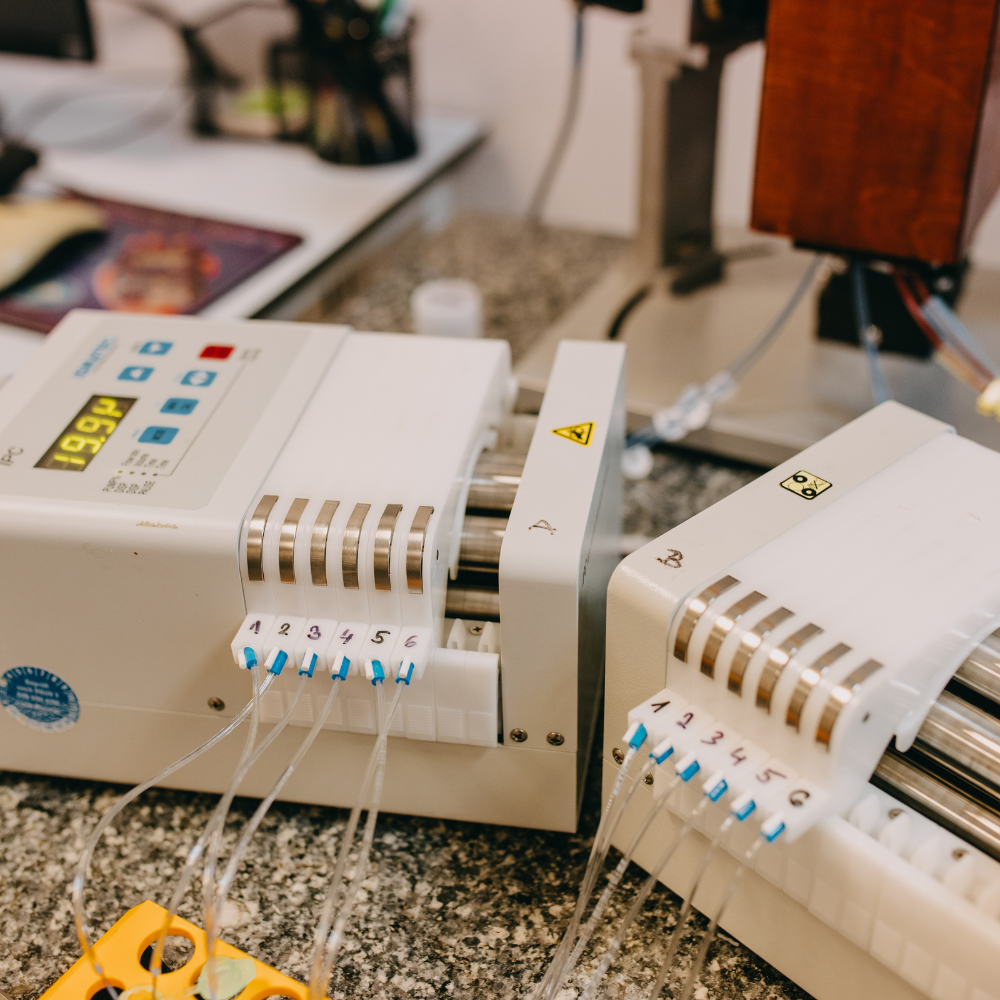
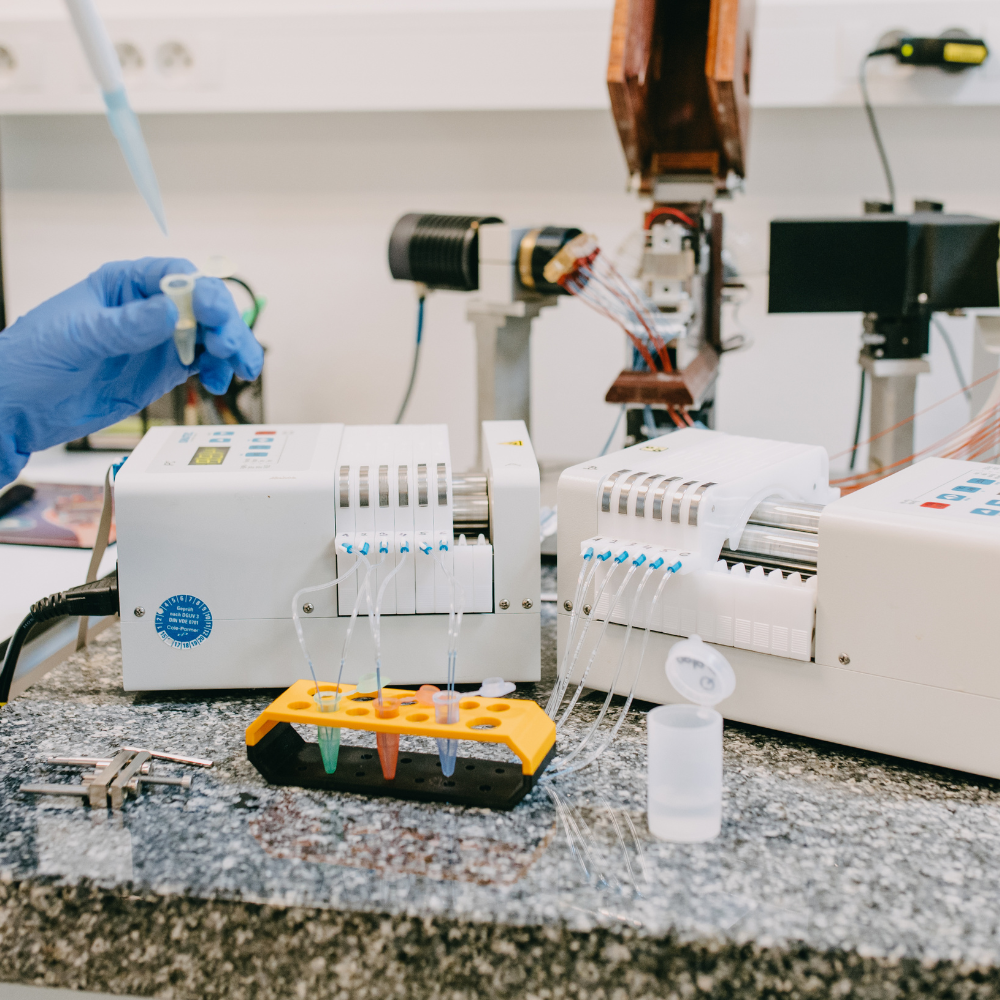
The laboratory prototypes of optical biosensors we develop in our team are medium-sized instruments that easily fit on a table. We have, however, also developed small versions for point-of-care applications, where the entire biosensor fits into a shoebox.
-
Such instruments could then be used also in the home environment?
Yes, we have in our portfolio also a small biosensor for farmers, used for detection of antibiotics in cow milk.
-
How big is the subject of optical biosensors around the world? Do you already cooperate on it with some international partners and if so, with whom?
The impact of particular research is difficult to assess but we can look at it for instance through the prism of the number of publications and their citations. The published works of our team have over 22,000 citations, which amounts to about 1,100 citations a year. I’d say that’s quite a respectable impact 😊 We collaborate with many colleagues and teams all around the world, mostly within international projects. At the moment, we have a very close cooperation with the team of Professor Yu from the Cornell University in the USA. Interest in our research is also reflected in the fact that several plasmonic biosensors we have developed are currently found in research laboratories from the United States and Europe all the way to Taiwan.
-
That is quite impressive… In this context, it probably will not be easy to tell which of your achievements you value the most?
I am always excited when we achieve something new and interesting. In medical applications, it always makes me really happy when we add, like a ‘cheery on the cake’, some small clinical study. For example, when we analysed samples from patients with the myelodysplastic syndrome or patients with kidney damage. This is very rewarding not only for us but also for our colleagues, physicians we collaborate with, who provide us with precious clinical samples.
-
By the way, how many members does your team have? And what fields and what countries do they come from?
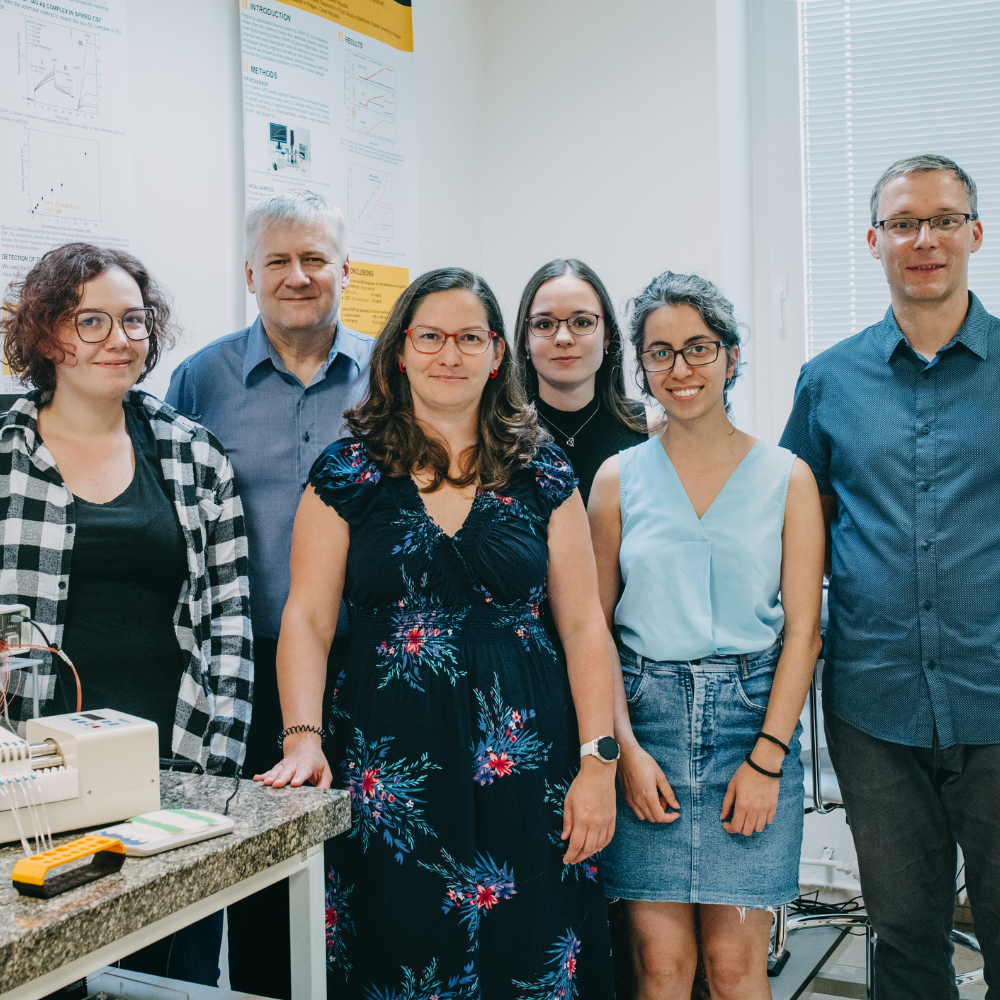
Our team has about 20 members. Because we do multidisciplinary research in physics, chemistry, and biology, the team includes experts across those fields, that is, from theoretical physics, optics, engineering, biochemistry, physical chemistry, and instrument design. Right now, we have in our team colleagues from Italy, Slovakia, China, and Iran. In the past, we also had colleagues from Poland, Ukraine, the United States, Portugal, Germany, and a few other countries.
-
What kind of expertise and services can your research team offer within NICR to other teams?
We offer the use of our biosensors for sensitive detection of a wide variety of molecules linked to cancer. But they can also be used to characterise and quantify biomolecular interactions of for the study and development of pharmaceuticals.
-
How is cooperation within the NICR doing, is it intensifying?
I think it is functioning quite well. We have approached colleagues from other groups and gradually established several new cooperations. I am glad that thanks to NICR we have the opportunity to discover new areas where our sensors can be applied, to extend our knowledge and acquire further experience, and to increase awareness of optical biosensors and their potential.
-
You lead a research group in the NICR but your ‘family group’ has increased as well. How do you manage to balance the two? Are conditions set right for women in science?
You are right, I am now on a family leave and at the same time I work part-time. Thanks to the very supportive approach of both my direct superior and head of the institute, I have been able to set my working conditions so that everyone is happy both at home and at work. But this certainly would not have been possible without my fantastic partner, who supports me and is, moreover, a fantastic cook. 😊 But a discussion about the conditions for women in science or in general the social perception of mothers of small children who work, that would take several interviews. I think that both the general public perception and the setting of the system is gradually improving, but the conditions are not always as favourable as in my case. I have been really lucky.