

What happens inside tumour cells when a slow-growing lymph node cancer transforms into an aggressive form of the disease? The key is the loss of a molecule called miR-29, which normally acts as a brake on tumour cell growth.
Measuring miR-29 levels could therefore help physicians identify high-risk patients early and better predict how the disease will progress. The results of the research conducted by an international team of scientists led by Marek Mráz from CEITEC Masaryk University, Brno University Hospital, and the National Institute for Cancer Research (NICR) were published in Leukemia, one of the top five journals in its field.
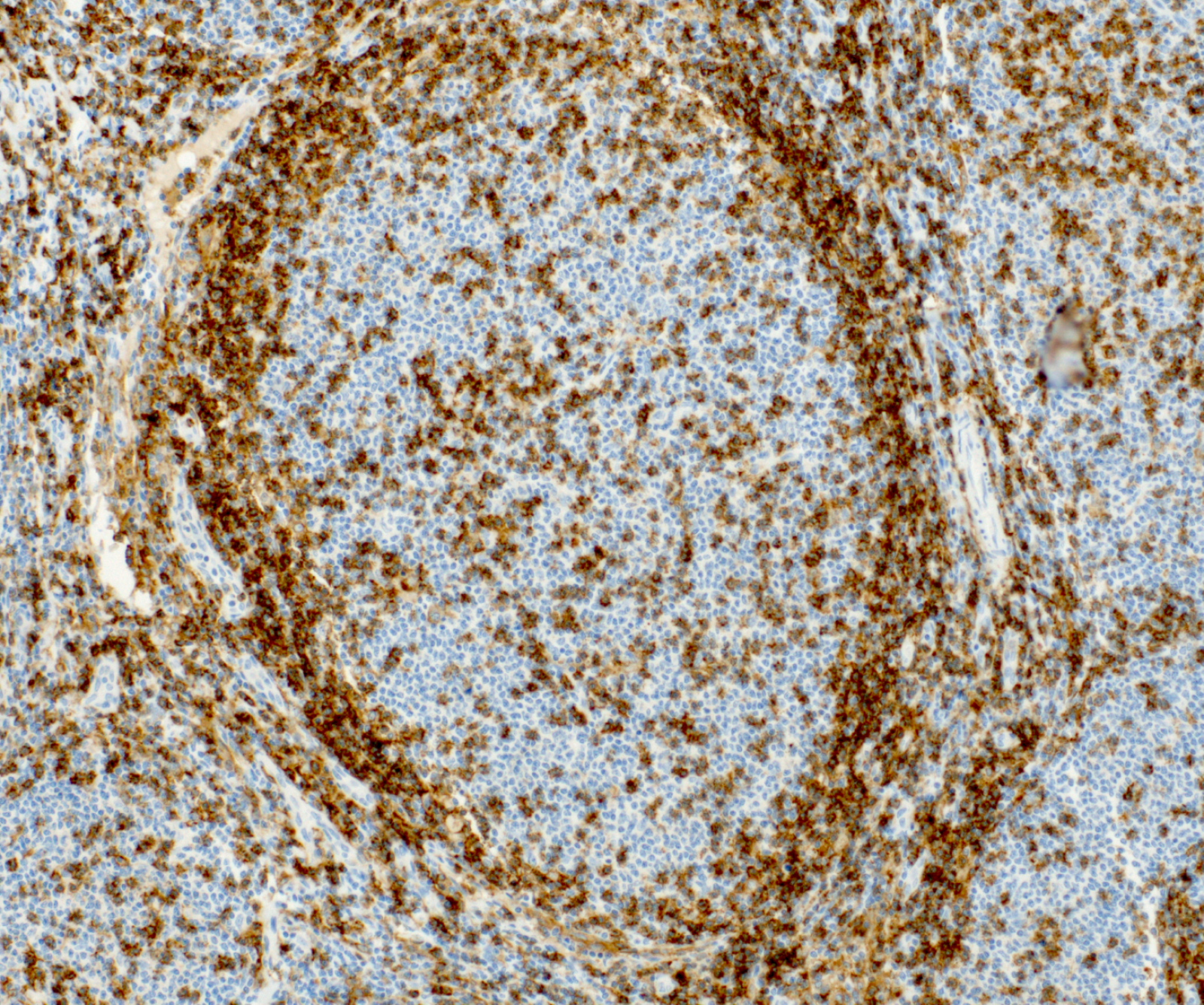
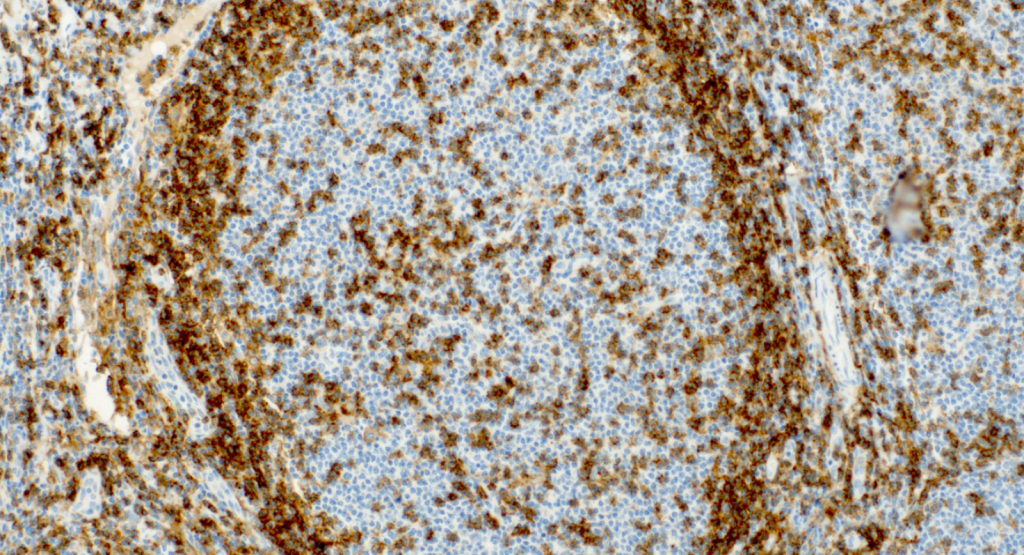
Follicular lymphoma is a type of malignant cancer arising from immune cells in the blood. It typically grows slowly at first, but in approximately one in five patients it can, over time, suddenly transform into a rapidly progressing tumour with a significantly worse prognosis. This transition (known as histological transformation) is crucial for treatment decisions and overall outlook. The research team investigated which processes occur in tumour cells during this change. They compared samples from the same patients before and after transformation to the aggressive phase. The analysis focused not only on protein-coding genes, but also on small regulatory molecules known as microRNAs, which fine-tune the production of proteins from other genes.
“We found that at the moment the disease begins to transform into an aggressive form, levels of miR-29 drop sharply. This small regulatory molecule normally functions as a natural brake on tumour cell growth. Its loss gives tumour cells an advantage – they become more responsive to signals promoting their proliferation and better able to adapt to changes in the tumour microenvironment,” explains the study’s first author, Daniel Filip. Without this “brake”, tumour cells multiply more rapidly and survive more effectively.
The research does not only deepen understanding of tumour biology; it also opens a concrete opportunity to improve patient care. In a large cohort of 185 patients, the scientists demonstrated that those with low miR-29 levels had a worse clinical course. The amount of this and other microRNA molecules may therefore help predict in advance which patients are at higher risk of rapid disease progression.
For more information, please visit the CEITEC MU website.