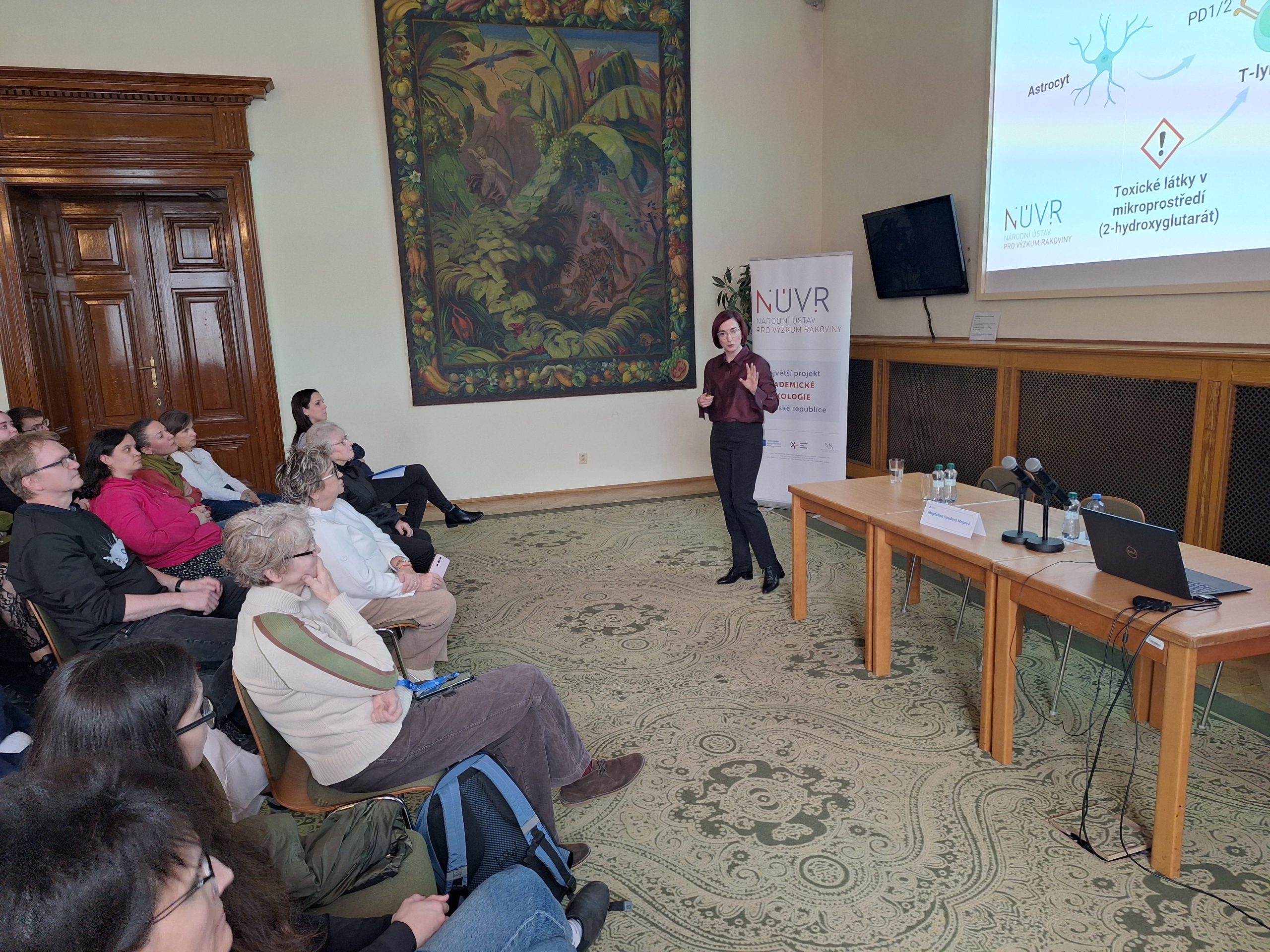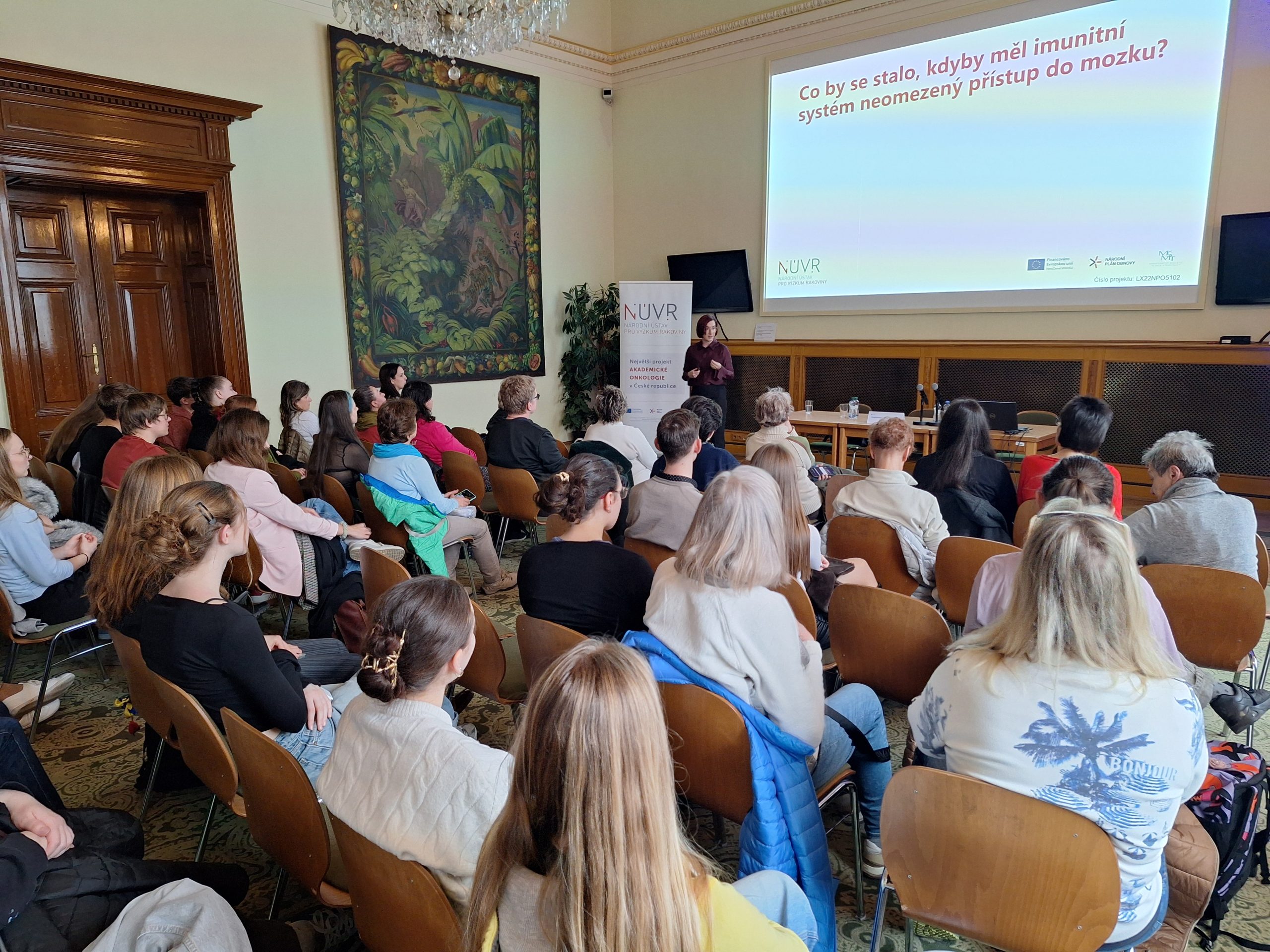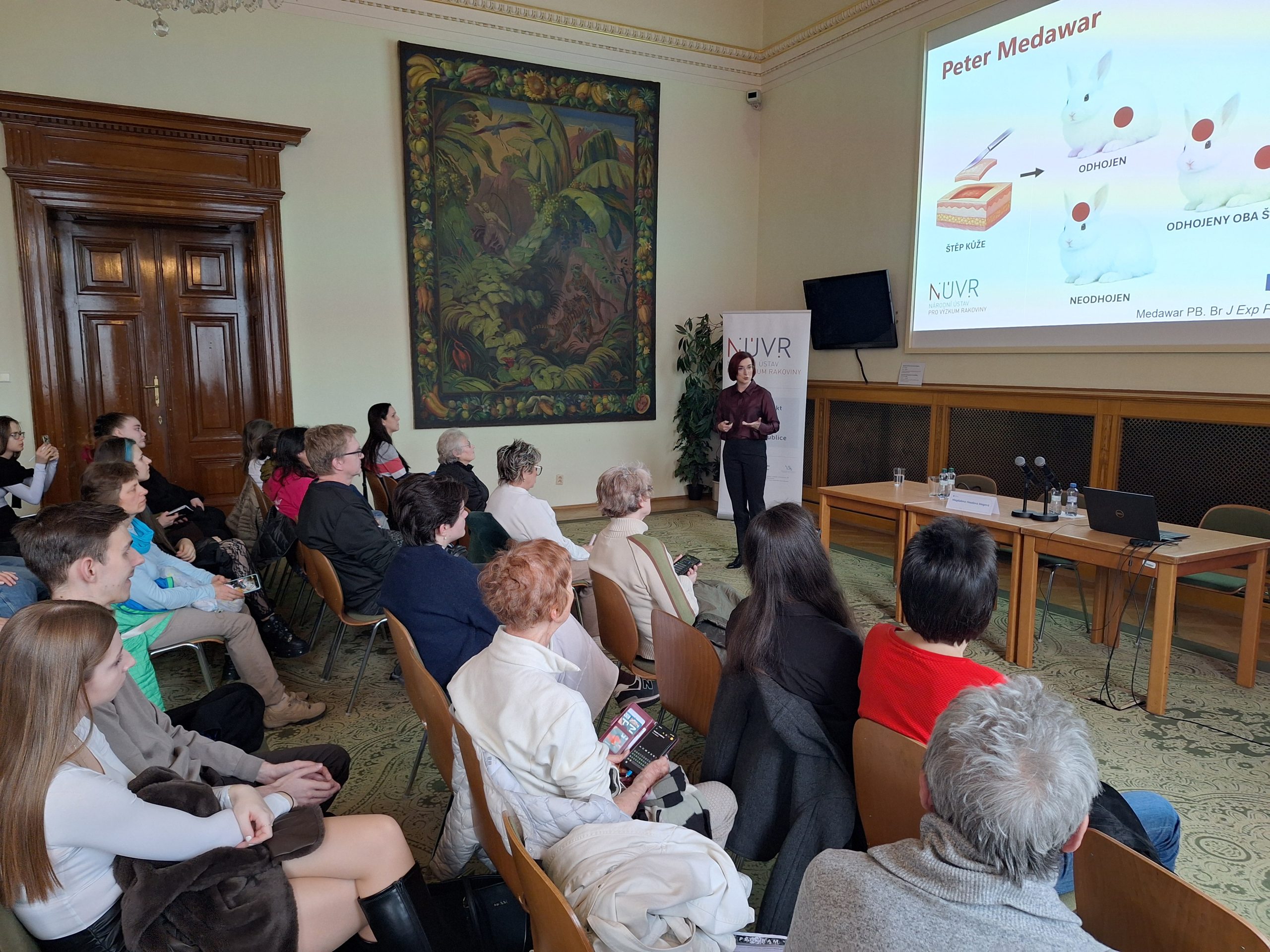



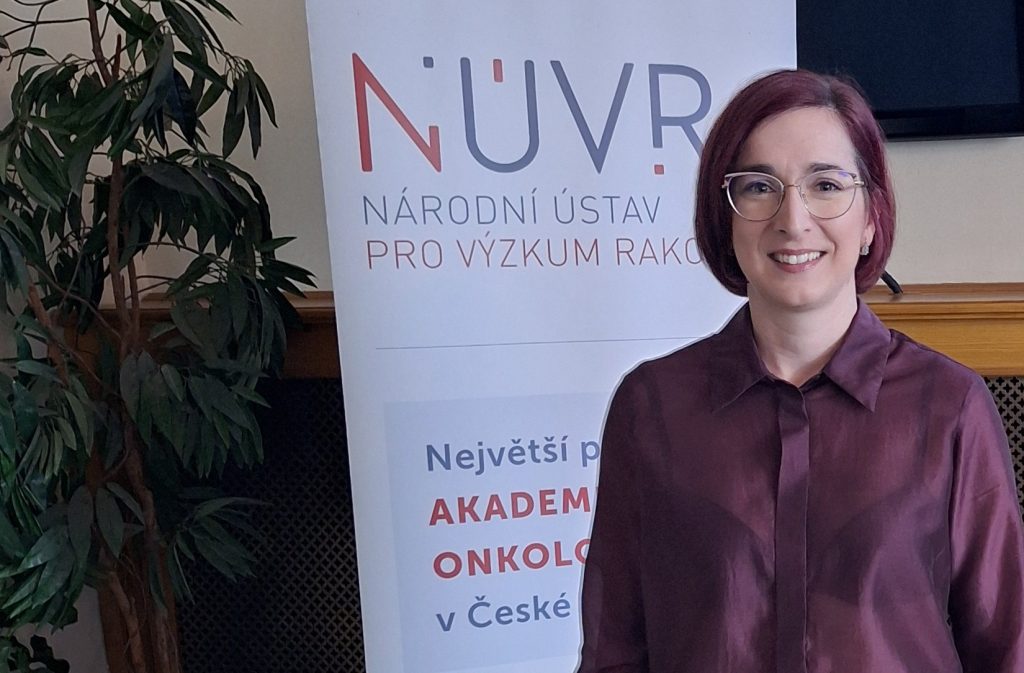
How does the immune system influence the development and progression of brain tumors, and what new treatment possibilities does immunotherapy offer? These questions were among the topics addressed in a lecture by Magdalena Houdová Megová from the NICR, delivered as part of the Brain Awareness Week festival and attended by dozens of members of the public.
The National Institute for Cancer Research (NICR) once again joined the popular science festival Brain Awareness Week this year, taking place from 9 to 15 March and presenting the latest findings in neuroscience to the public. Among the rich program was the lecture “Immunity of Brain Tumors: From Immune Privilege to Immunotherapy,” presented by Magdalena Houdová Megová from the Laboratory of Cancer Cell Biology at the Institute of Biochemistry and Experimental Oncology, First Faculty of Medicine, Charles University, and NICR.
In her presentation, she explained how our understanding of the relationship between the brain and the immune system has changed in recent years. Until recently, the brain was considered an “immune-privileged” organ – an environment largely separated from immune responses. This view, however, changed fundamentally after the discovery of the brain’s lymphatic system, which demonstrated that immune cells actively communicate with the central nervous system.
A significant part of the lecture focused on glioblastoma, the most malignant brain tumor in adults. It is extremely difficult to treat, partly because it creates a strongly immunosuppressive microenvironment. The tumor can “reprogram” surrounding cells – such as macrophages or T lymphocytes – so that instead of defending the body, they support tumor growth. Research therefore focuses on identifying and disrupting these mechanisms. Scientists from the First Faculty of Medicine of Charles University involved in NICR are studying, among other things, cells surrounding tumor blood vessels and their interactions with the immune system. By analyzing tumor tissues and experimental models, they investigate how tumors manipulate immune responses and which cells in the microenvironment play key roles in suppressing anti-tumor immunity.
In the final part of the lecture, which was attended by approximately 50 visitors and received very positive feedback along with lively discussion, Magdalena Houdová Megová outlined current directions in the immunotherapy of brain tumors. These include strategies to “release the brakes” on the immune system using checkpoint inhibitors, the development of CAR-T cell therapies targeting specific molecules on tumor cells, and approaches aimed at reprogramming the tumor microenvironment so that it changes from immunologically “cold” to immunologically active and capable of mounting an anti-tumor response.
The brain through the lens of biomedicine
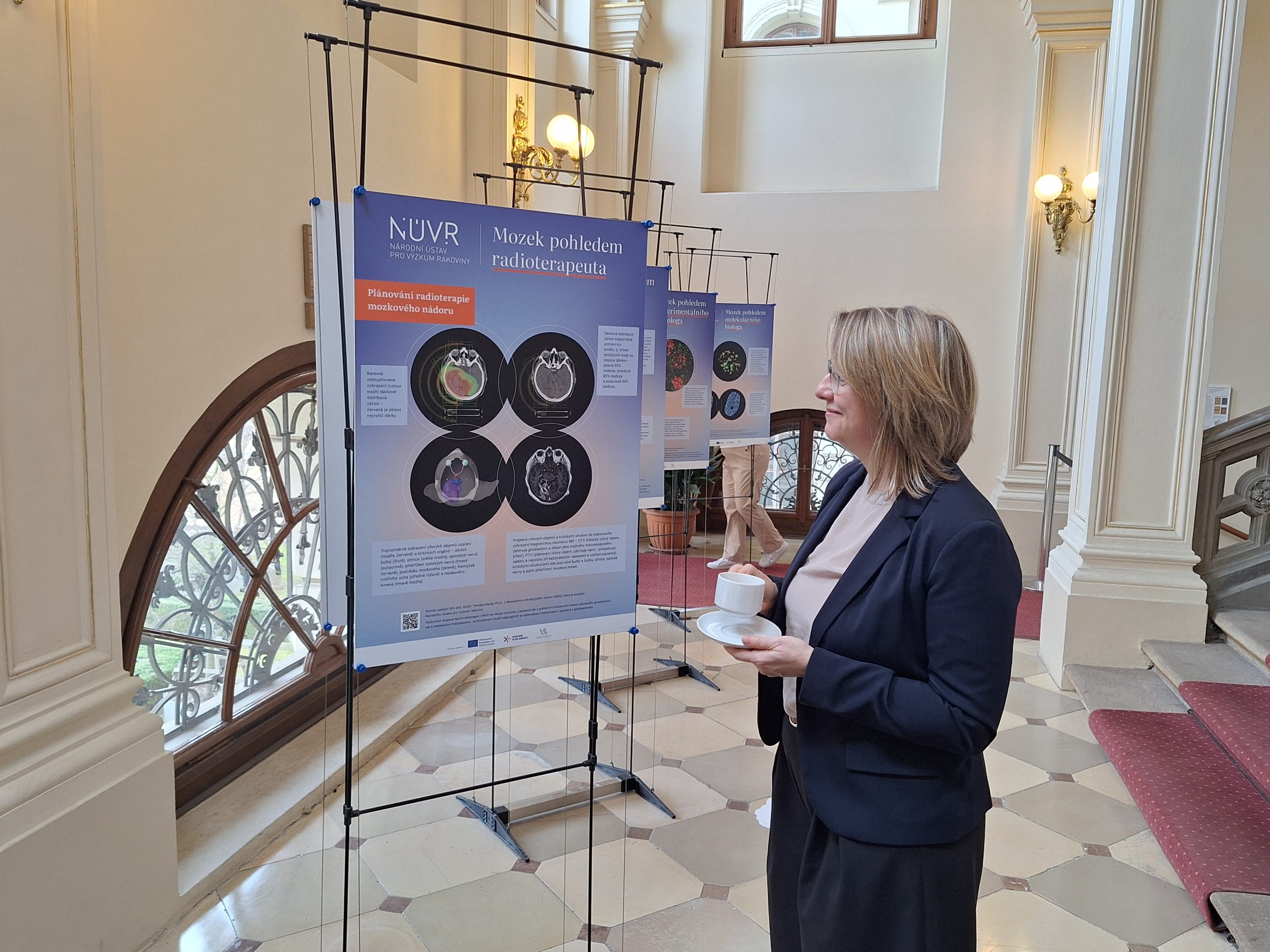
The festival’s accompanying program also features a mini-exhibition titled “The Brain Through the Lens of Biomedicine,” prepared by research teams from NICR. Across seven exhibition panels, visitors can explore unique images accompanied by explanatory descriptions showing how the brain and its cells are viewed in health and disease by a molecular biologist, experimental oncologist, radiologist, radiation oncologist, and neurosurgeon.
Participation in Brain Awareness Week represents an important opportunity for NICR to bring current research in oncology and neuroscience closer to the public and to demonstrate how scientific discoveries contribute to the development of new diagnostic and therapeutic approaches.