


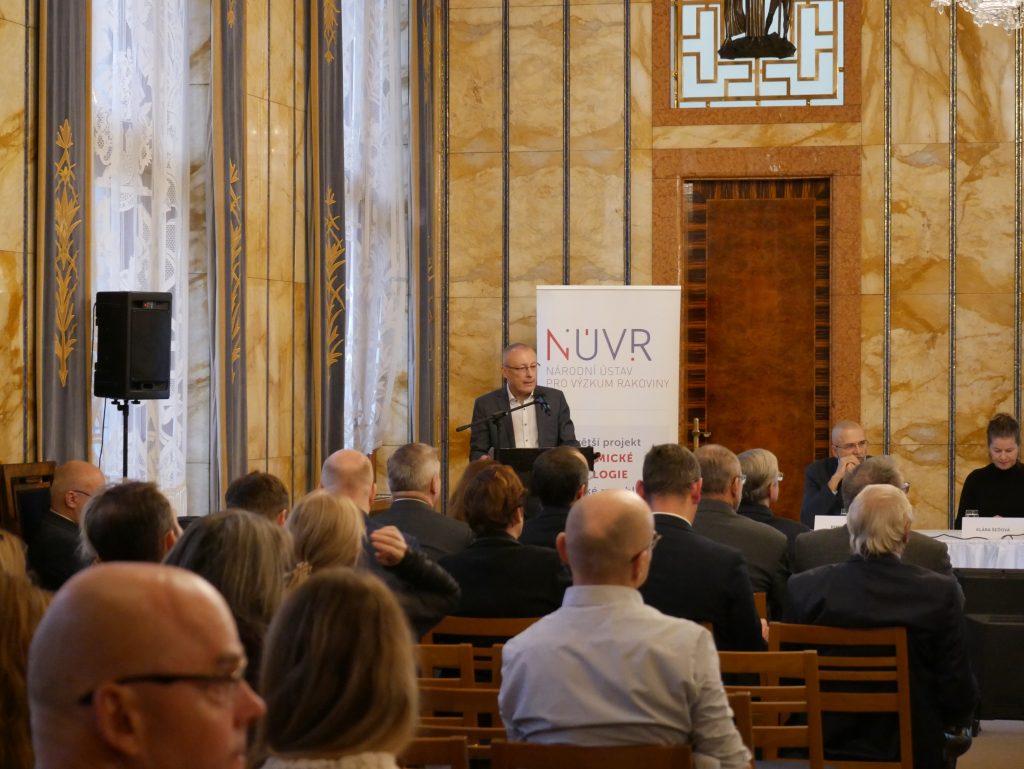
On 2 December 2025, a summary conference of the collaborating EXCELES projects was held at the Residence of the Mayor of Prague. EXCELES is a programme of the Ministry of Education, Youth and Sports aimed at supporting excellent research and the emergence of national scientific authorities. Funded by the National Recovery Plan, the projects connect key biomedical institutions across the Czech Republic and strive for what Czech research has long been lacking: cooperation rather than fragmentation.
Four of the five projects took part in the joint discussion – the National Institute for Cancer Research (NICR), the National Institute of Virology and Bacteriology (NIVB), the National Institute for Neurological Research (NEUR-IN) and the National Institute for Research on the Socioeconomic Impacts of Diseases and Systemic Risks (SYRI). Each represents a different scientific domain, yet their collective presentation showed how cooperation can accelerate both clinical and societal impact.
Mayor Bohuslav Svoboda, under whose patronage the conference was held, recalled in his opening remarks that EXCELES is among “the most ambitious Czech science programmes in recent years.” According to him, it is crucial that the institutes managed to connect research organisations and regions and create functional networks with measurable outcomes. “The result is not just publications in high-impact journals. It is about educating the next generation of experts, improving diagnostics, enhancing prevention and accelerating the transfer of knowledge to patients,” he said. “For us as a city, this is important not only scientifically, but above all humanly. Your work has a direct impact on the lives of our fellow citizens, even if it is not always visible at first glance,” Mayor Svoboda added.
Sustainability Is Not a Formality, but a Commitment
The next speaker was Pavel Doleček, member of the Board of the Technology Agency of the Czech Republic, who has been following EXCELES since its creation and contributed to its concept, implementation and conditions within the National Recovery Plan. He reminded the audience that the projects were conceived during the COVID-19 pandemic, when the country was faced with a key strategic question – build new research institutions or connect the existing ones? EXCELES, he argued, clearly proves that the latter was the right choice. “We did not create purpose-built consortia just because funding was available. The goal was to establish genuine national authorities – the kind you can present when someone asks what top-tier Czech science in oncology or virology looks like,” he said, adding: “I am glad that four of the five projects are standing on the same stage today, communicating, sharing experience and connecting people. That is the true meaning of excellence.”
He also stressed that sustaining these national authorities must not be a mere formality, but a continuous effort toward long-term and stable financing. “EXCELES is a successful programme – and a commitment for the future. Sustainability will not come automatically, but it is worth pursuing,” concluded Pavel Doleček.
Excellence Emerges Where We Build Relationships, Not Walls
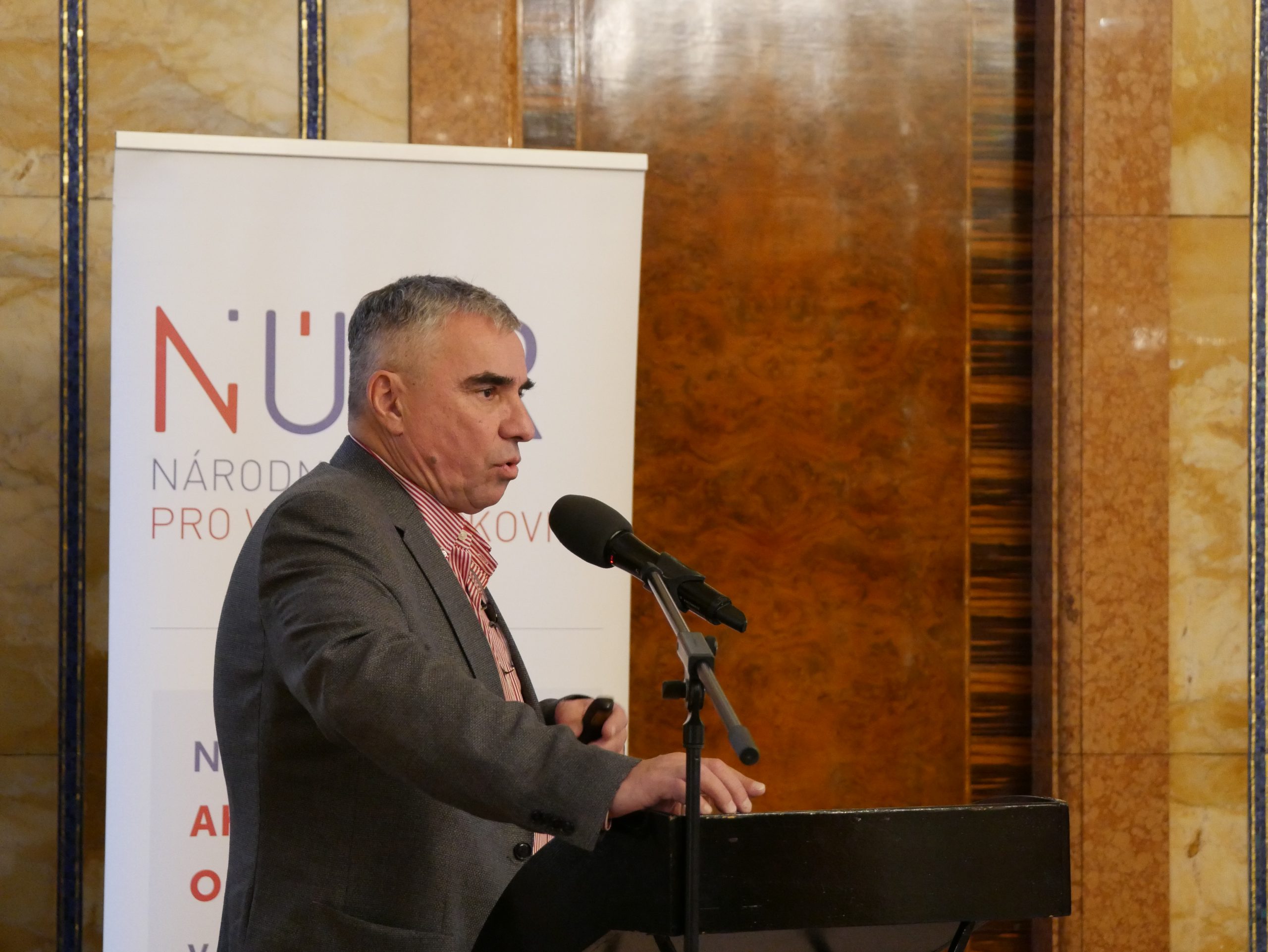
Aleksi Šedo, Director of NICR, confirmed in his presentation that the idea to create a virtually interconnected network of established top-level experts who drive their field forward and share common goals – regardless of whether they come from universities, the Czech Academy of Sciences or hospitals – has brought clearly measurable amplifying effects.
“In short, a synergy has emerged where energy and outputs do not simply add up, but multiply,” he said, noting that instead of new walls, an environment was built that enabled, among other things, the sharing of know-how, technologies and above all the formation of collaborations. “The most important thing is not that seventy teams came together within NICR — that’s ultimately just a number What matters is that these groups began to create together. We see it, for instance, in publishing output, which is growing year-on-year both in volume and quality. While the original target was to reach 65% of articles in Q1 journals, today the proportion is around 70%. And even more important is the composition of authorship, with a substantial share of publications now produced not only across institutions, but also across regions and in cooperation with international experts,” he explained.
Šedo noted that NICR has led to the establishment of six new research groups, often built around successful returnees from abroad, as well as two new doctoral study programmes – both already training future leaders in the field. The consortium also invested in equipment and technologies not tied to a single workplace, but shared among teams, enabling more efficient resource use and closer integration of research with clinical practice.
NICR's development has not focused solely on research, but also on communication, education and work with young talent. Šedo highlighted hundreds of secondary school students who have gained hands-on experience in NICR laboratories, public outreach activities, original podcasts and more than a thousand media appearances that help bring cancer research closer to the public. “Excellence cannot remain confined to the laboratory. To matter, it must be visible, comprehensible and inspiring – to researchers, students and society alike. We have proof that building a virtual consortium made sense. Now it is up to us to sustain it. NICR is not a project that ends – it is an environment we created, and one that can continue to thrive,” Šedo concluded.
Concrete Benefits of NICR for Clinical Practice
Selected results from NICR’s five research programmes – covering the entire innovation chain from basic to applied and translational oncology research – were presented by Jaroslav Štěrba, Scientific Director of NICR.
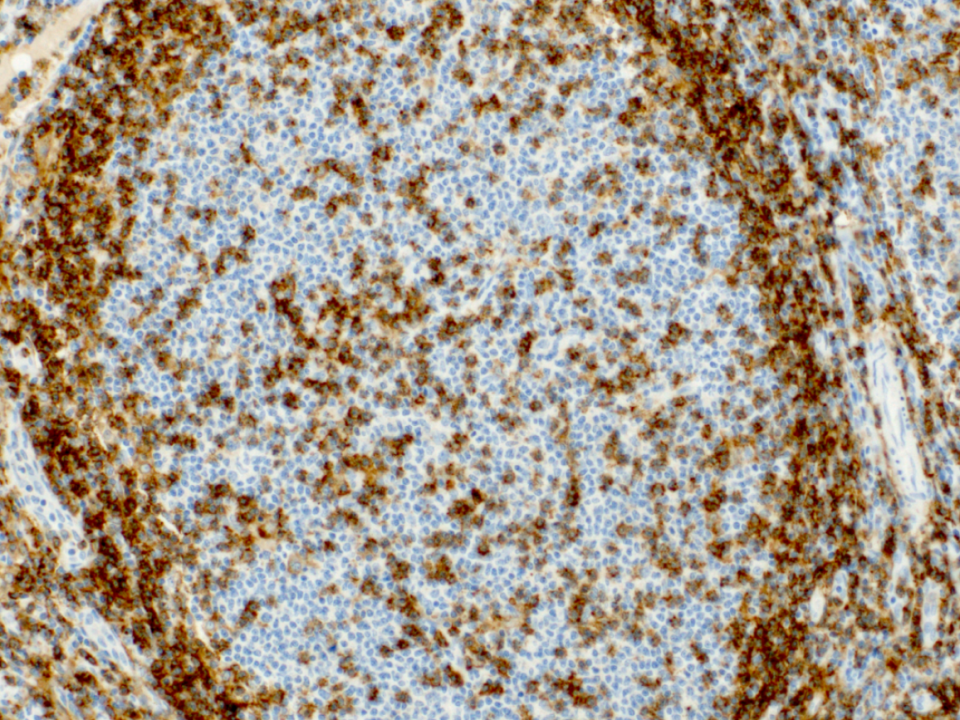
One of the most visible achievements was the identification of a new subtype of acute leukaemia, the so-called CML-like disease, now included in the WHO classification of haematological malignancies. The discovery was made by researchers from the Second Faculty of Medicine, Charles University, and Motol University Hospital, led by Jan Trka and Jan Zuna. The team of Marek Mráz at CEITEC MU described a promising therapeutic target – FoxO1 – capable of overcoming resistance to ibrutinib in chronic lymphocytic leukaemia. Its inhibition induces apoptosis of CLL cells and enhances the effect of BTK inhibitors. Teams within NICR’s Prague hub led by Zdeněk Kleibl and Libor Macůrek developed a platform for functional testing of CHEK2 missense variants, turning most variants of uncertain significance into actionable risk biomarkers by distinguishing truly pathogenic variants associated with increased breast cancer risk. Štěrba also highlighted a prospective validation study aimed at confirming newly identified breath-condensate lung cancer biomarkers for the diagnosis of pulmonary nodules. If validated by the team of Marián Hajdúch at IMTM and Olomouc University Hospital, this method could diagnose lung cancer with CT-comparable accuracy using a fast, non-invasive approach capable of detecting the disease early and significantly improving cure rates.
“And finally, I would like to mention our work at the Faculty of Medicine, Masaryk University and University Hospital Brno, together with the team of Lenka Zdražilová Dubská. We conducted a clinical study demonstrating that personalised anti-tumour vaccines improve survival in high-risk children with solid tumours. I presented these findings at the International Society of Paediatric Oncology in the United States,” Štěrba said, concluding: “We have shown that the results of our research groups have a direct impact on clinical practice and the lives of our patients.”
The Biggest Challenge for Czech Science Beyond Funding? Fragmentation.
A broader view of Czech research and international scientific integration was outlined in the closing lecture by Jan Konvalinka, Director of the Institute of Organic Chemistry and Biochemistry of the Czech Academy of Sciences. “If I had to name the biggest limitation of Czech science besides funding, it would be fragmentation – the division into many small islands existing side by side, both institutionally and across disciplines,” he stated.
EXCELES, he argued, shows that the solution is not administrative mergers, but horizontal interconnection of existing teams. He also cautioned that science faces another challenge – communication. “Even the best drug is useless if people do not trust it. We must be able to explain what we know, and equally what we do not yet know. Only then can we earn public trust in science and research,” Konvalinka said.
The summary conference of EXCELES collaborative projects thus demonstrated that excellent research in the Czech Republic is built on cooperation rather than competition between institutions. The achievements of individual national authorities are now visible – and the key task ahead is to sustain them, develop them further and convincingly communicate their value to society.